Sipe Classical Guitars
Art & Craft of Lutherie
Building concert quality guitars for demanding players. It’s all about the sound and playability. I build instruments to satisfy the most discerning musicians with a level of craft required to give the professional player an instrument that inspires and is responsive to their touch. I came to luthiery in a roundabout way; as a musician first and then as a builder and repair person. My range and years of experience playing, repairing, studying instruments and building them by hand has given me the tools to deliver the finest instruments to you.

My Guitar Building & Design Approach
This is a singular craft that is about careful consideration and refinement of every part; all in the goal of building a meaningful, superbly functional, and aesthetically pleasing object. It’s not just about fine woodworking or construction techniques and plans. The woodworking aspect is a means to an end. It’s about your relationship with my guitar and what you hear and feel. My guitars are designed and crafted to create a sound and experience that inspire classical players.
Handmade Classical Guitar Models
Traditional & Modern
Signature Guitar Model
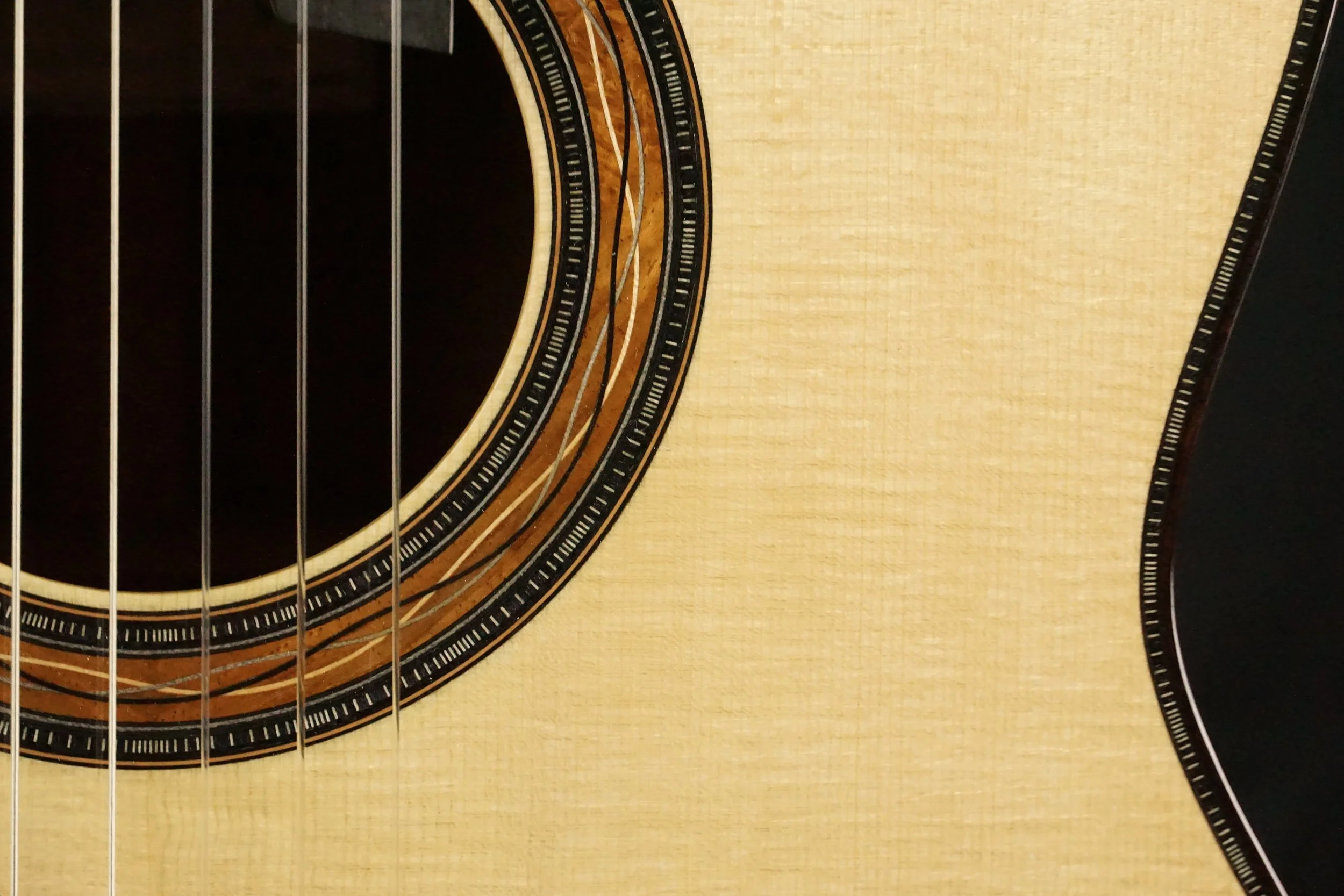
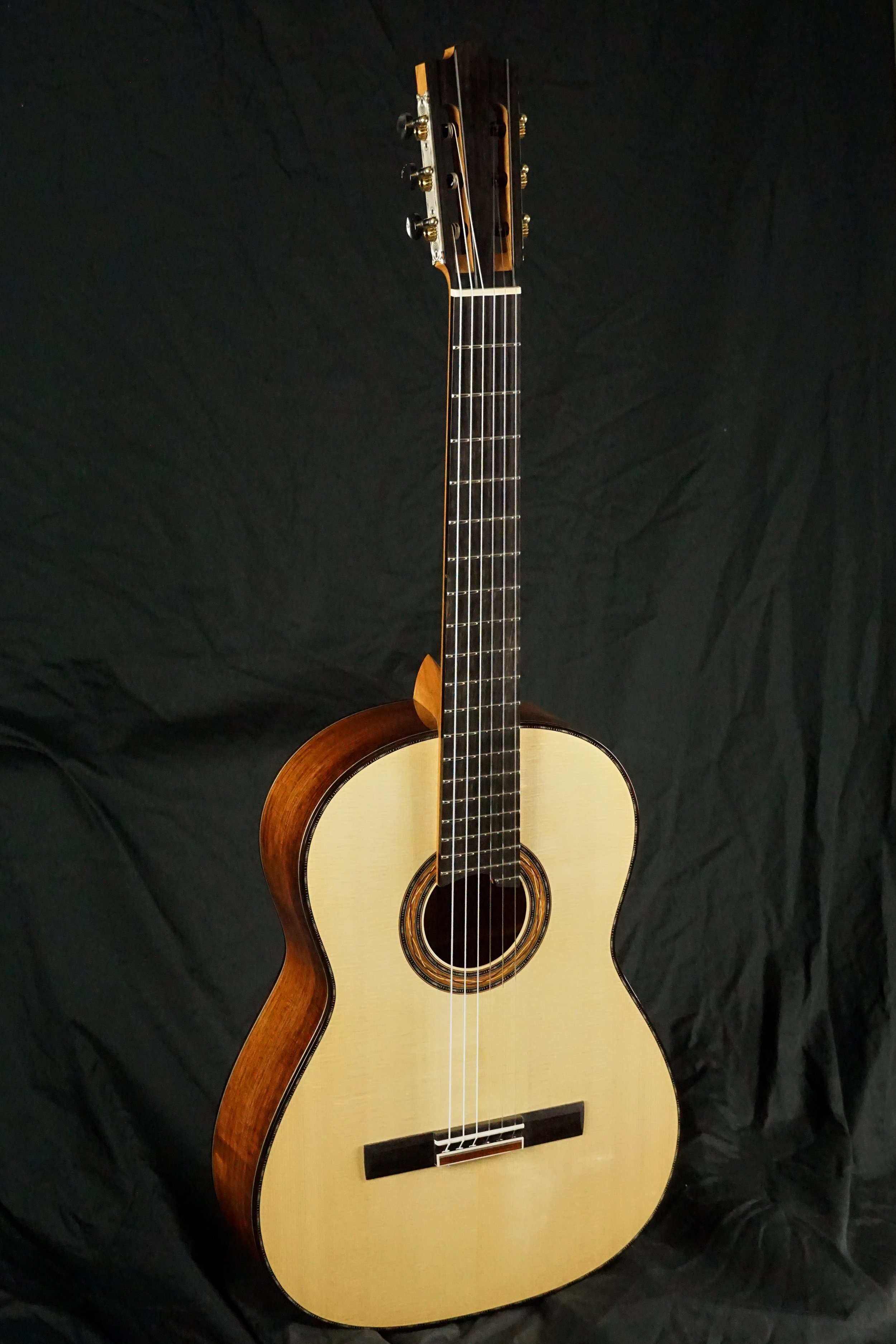
Signature Model Guitar features modern aesthetic elements which include the “new waves” rosette design.
Bracing Patterns Available: Wood Lattice or Floating Tie
Top Wood: Choice of European Spruce, Engelmann Spruce, Western Red Cedar
Back & Sides Wood: East Indian Rosewood Standard; Additional Wood Selection Available on Request and Priced Based on Current Market, Grade, Figure, etc.
Traditional Guitar Model
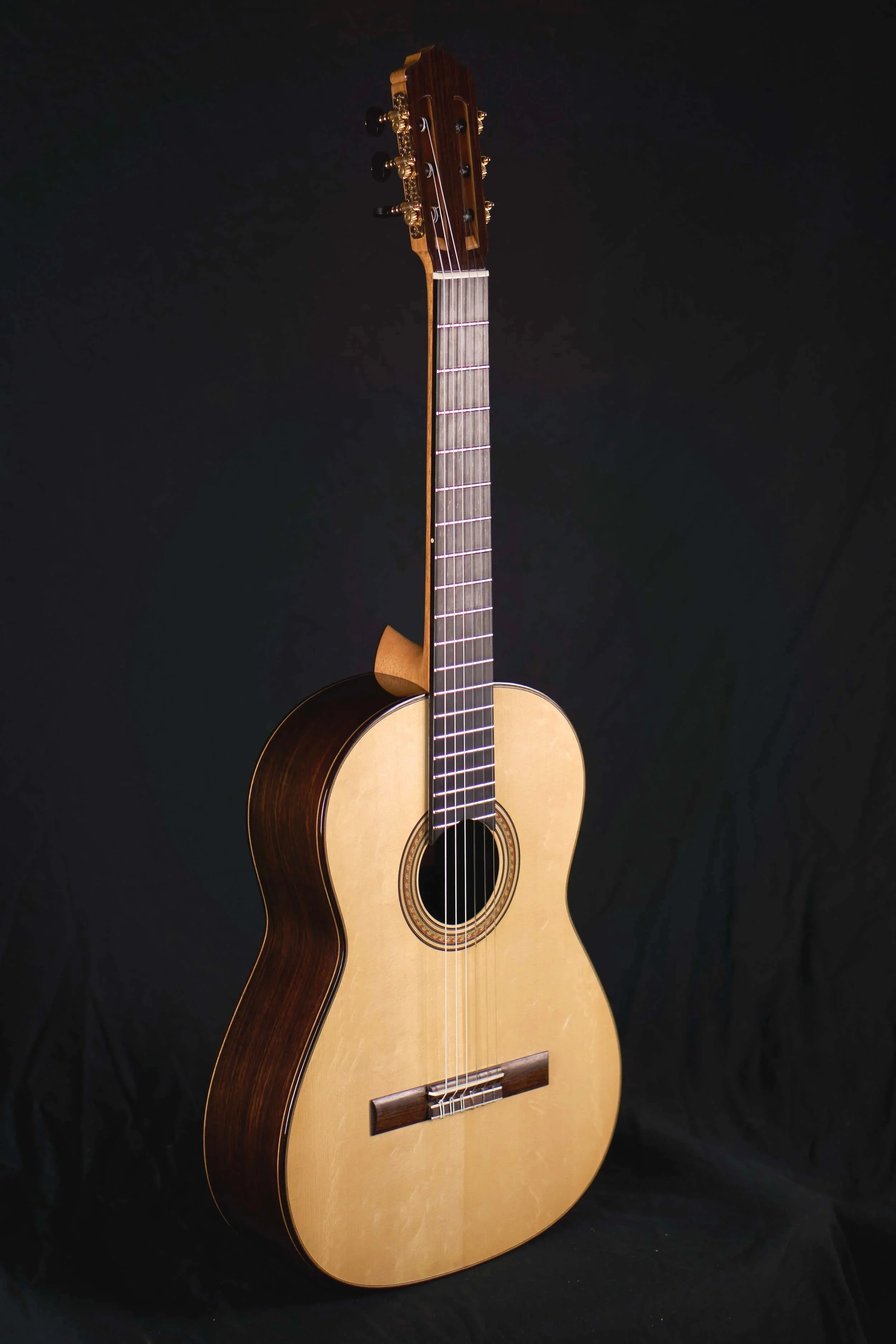
The Traditional model features a timeless classical guitar aesthetic with a mosaic rosette and classical detailing.
Bracing Patterns Available: Open Harmonic Bar or Asymmetric
Top Wood: Choice of European Spruce, Engelmann Spruce, Western Red Cedar
Back & Sides Wood: East Indian Rosewood Standard; Additional Wood Selection Available on Request and Priced Based on Current Market, Grade, Figure, etc.
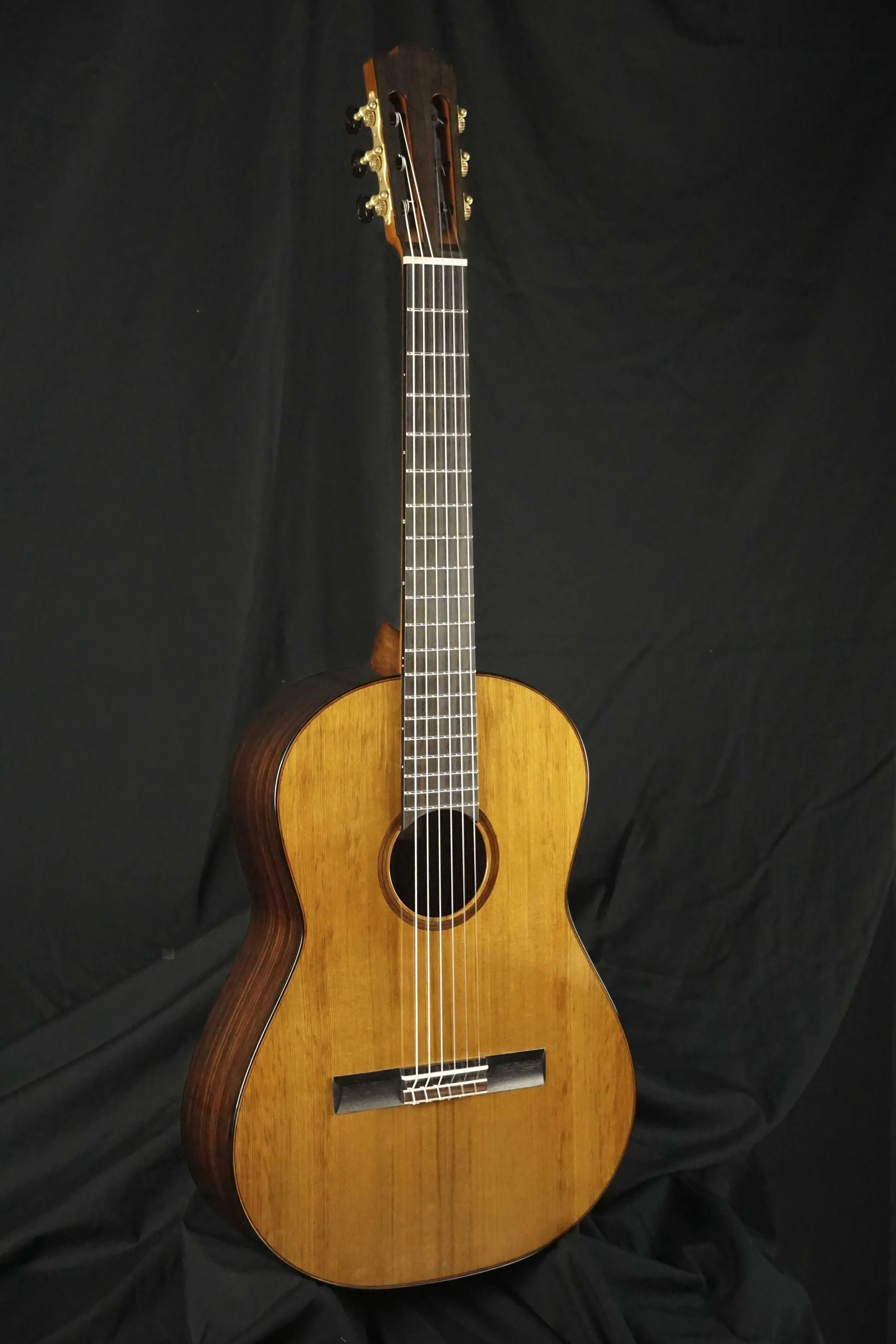
Spartan Guitar Model
A concert guitar with simplified aesthetic elements, perfect for students who need the sound and quality of a handmade instrument without all of aesthetic detailing.
Bracing Patterns Available: Open Harmonic Bar or Asymmetric
Top Wood: Choice of European Spruce, Engelmann Spruce, Western Red Cedar
Back & Sides Wood: East Indian Rosewood Standard
Purchasing a Handmade Classical Guitar
Guitars are available directly from me and are made to order.
Working together we can bring your guitar to life by finding the materials and design that best fits your playing and aesthetic.
My handmade classical guitars are available at retail dealers in North American & Europe including Guitars International, The Rosewood Guitar, and Sicas Guitars.
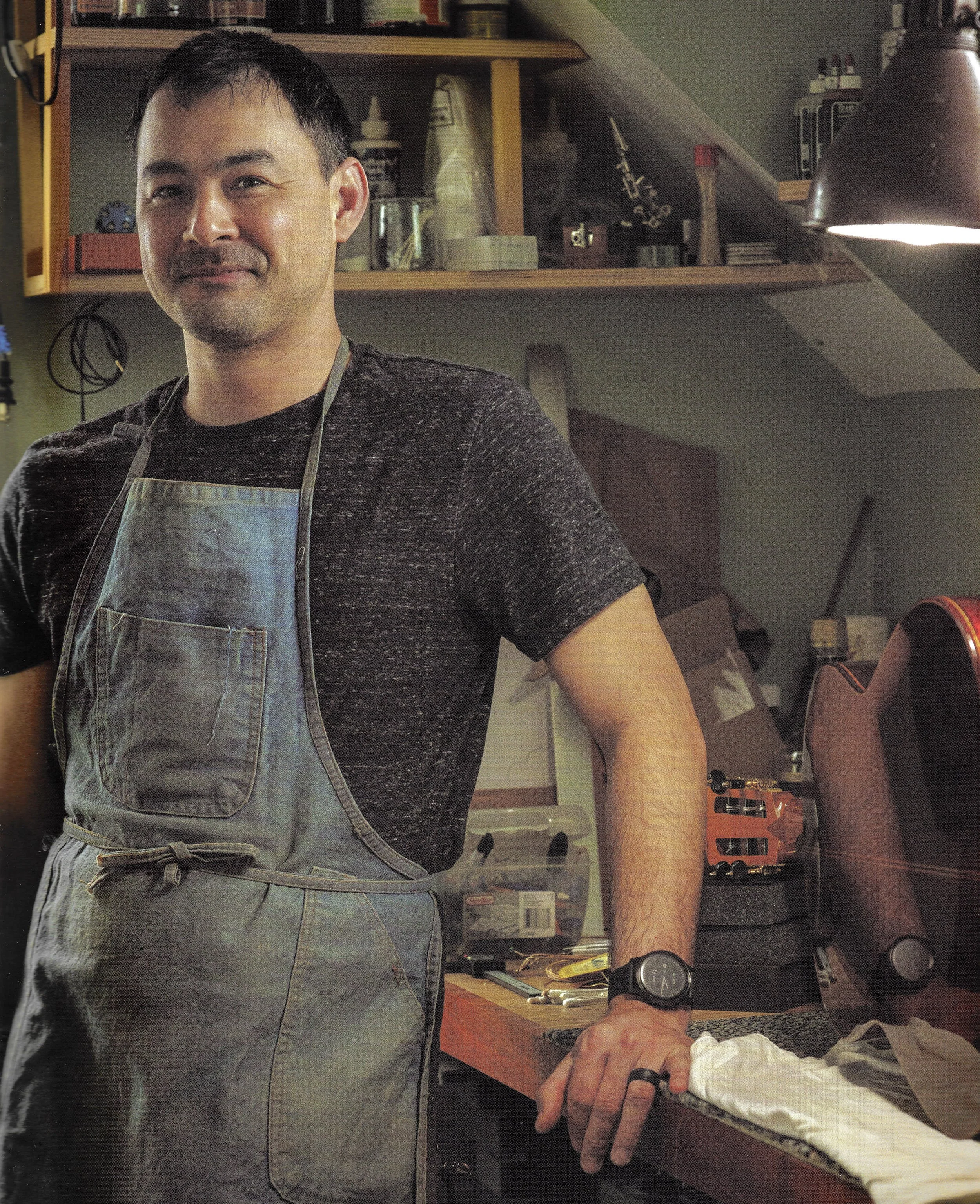
About Max Sipe
Luthier & Musician
My journey into lutherie is a natural one.
As a kid I was always drawing and making model planes and cars. Simultaneously, I was involved in music. I had piano lessons starting in the 1st grade and I played music all the way thru college.
I graduated with a BA in music from the University of Portland and studied classical guitar with Jeffrey Ashton and Scott Kritzer as well as attending numerous master classes. While teaching music and performing after graduation, I was always preoccupied with other projects: building furniture, painting cars, fiberglassing, etc—which led to me to try my hand at lutherie.

It was a good feeling to be able to connect two of my passions: music and a hands-on construction project.
I made my first guitar in 2005 and I've been hooked ever since. From that first guitar, I became fascinated with how the instrument could be maximized to create an experience that brings the best out of each player.
I am mostly self taught, but I am also lucky to live in a place where I am surrounded by gifted luthiers with whom I can learn and share.
Ryan Walsh
I have been a full-time performing classical guitarist and educator for years, and one of my students turned me on to Max's instruments. I met with him at his studio and he built me a beautiful spruce classical. He was a pleasure to work with, and is an extraordinary builder who I would highly recommend to anyone. If you're looking for an expertly crafted instrument in the PNW, I suggest getting in touch with Max!
Cameron O’Connor
Having a guitar made by Max is a joy. From the process of discussing options and building philosophies, to the selection of woods, to the end product, Max is easygoing and professional. His lack of dogma and openness to experimenting is refreshing. I own two of his “firsts” (a Romantic guitar and lattice-braced instrument) and they’re both beautiful instruments in terms of the visual and sound aesthetics. But (more importantly!) they are a piece of cake to play. Max is a solid guitarist, so playability is never an issue. There’s a strong feeling of never being let down when playing his guitars: I play better when on a Sipe instrument.
Zebulon Turrentine
[Max’s] workmanship has always been very clean and the overall sound quality of his guitars has always been on par with other very nice traditional instruments from past and contemporary makers. In addition, he is a very down to earth and splendid person to be around.